











Creating Situation: Log, Map, & Spyglass
Monday, December 31, 2007
Here's the situation creation method for Codename: VALVE. The main action of the game concerns sailing the Wild Blue, exploring new places, getting into trouble, and winnning plunder. To create a situation, the players use the ship's log, their maps of the Wild, and a spyglass.The Log
First, the Captain consults the ship's log. It's printed in the book, with empty spaces after each entry for you to write some details (yes, you're supposed to write in the game book! gasp!). A log entry will briefly describe a starting circumstance for the ship and crew, like, "Crowsday, 39th of Elm. Crew sick, seeing visions. Must find a spirit healer soon." Or, "Fresh shot and powder and the guns new polished, crew spoiling for a fight."
The Map
Then, the crew picks one of the map sheets. These are navigation charts that depict a group of flying islands, with drawings of terrain and places on them, along with little notes and names for things, in the classic Tony Dowler style. Sometimes an island will be very low altitude and partially submerged in the heavyside layer.
The crew and Captain together decide where to go on the map. You're like, "We sail for the town of Silver Fall, here by the big waterfall that's going off the edge." There might be a note about Silver Fall written on the map ("Avoid the people of the Accord"). You can also check the dispatches in the book about Silver Fall. The dispatches are the scouting reports of Imperial assessors, written as brief first-hand accounts -- just enough to get your imagination going.
The crew starts out with three of the seventeen maps. More maps can be found as part of game play.
The Spyglass
Finally, someone has the spyglass. As you sail in, the person with the spyglass can look and see things. They can invent details of the place by calling out what they see: "It looks like the towers are burning!" Or they can solicit details from the other players by asking a question: "Are there supposed to be fires up in those skinny towers?" Any of the crew can respond. You can respond to a declaration with support ("On fire? The place must have been attacked by the Empire!") or with doubt, "Nah, it's probably not on fire. Those are lights to help ships land." Crew can also ask leading questions like, "Do you see any blue smoke?" or "Can you tell if the festival flags are flying yet?"
Crew can ask the person with the spyglass to check again, if anyone is obviously unhappy with what is seen. "No, that couldn't be! Check again." The person with the spyglass may pass the glass to someone else with, "Well, take a look for yourself." A crew member may also take the spyglass with, "Let me see that."
Once everyone has had the spyglass (or passed on the opportunity to have it) then you've seen all you're going to see. The Captain should note spyglass details in the ship's log.
Whenever the ship moves to a new place on the map, you check for Dangers and Opportunities. This is the "wandering monster" element of the game, which puts pressure on the crew to take their current loot and go home. They can always choose to press their luck and hunt for more loot, risking an encounter with an Imperial hunter or other calamity.
Labels: rpg, valve, work in progress
Suffering Mechanic
Thursday, December 06, 2007
I came up with a mechanic that I think is pretty nifty. It's a mashup of "Bringing Down the Pain" and Keys from TSOY, plus a touch of the Trollbabe re-roll system.Conflicts are one-roll affairs. You roll your dice, I roll mine: the highest die wins. But then...
Suffering
If you don't like the outcome of the dice roll, you can choose to Suffer. Add another die to your pool, then both sides re-roll.
When you Suffer, say how your opponent stomps on you, and check off one of your Sufferings. You have one of each, and each one, when checked, imposes a taboo on you. It also has a buyoff condition that lets you uncheck it.
For example:
Humiliation
Taboo: You may not intimidate, frighten, or otherwise impress anyone with word or deed.
Buyoff: Pick a fight with a mate who doesn't deserve it.
This is for a game project (codename: VALVE) that I've been working on lately. I'll probably post some bits and pieces like this as I go.
Labels: rpg, valve, work in progress
19 Questions: Stranger Things
Sunday, February 05, 2006
These questions are courtesy of Troy Costisick, and his blog.1.) What is your game about?
Supernatural action-adventure featuring bigotry, hatred, understanding and compassion.
2.) What do the characters do?
They have prophetic dreams about people in crisis, seek out those people, and resolve the crisis (for better or worse).
3.) What do the players (including the GM if there is one) do?
Players: Create a half-human, half-demon Stranger and choose the elements of his or her Dream. Confront the elements of the prophetic dream in the world. Judge the situation, and act to create change in the lives of the people in crisis.
Directors: Flesh-out the dream elements into characters and situations. Reveal the dream in play.
Everyone playing may change roles from Player to Director during or between sessions, depending on group preference.
4.) How does your setting (or lack thereof) reinforce what your game is about?
The setting is the sprawling, gothic City of Forgotten Gods. Humans and Demons must live in close proximity in the City, which is the last haven against the Wild. The City creates a pressure-cooker situation in which the two peoples must confront each other -- with hatred and fear, or compassion and understanding. As hybrids of the two peoples, the Strangers are caught in the middle.
5.) How does the Character Creation of your game reinforce what your game is about?
During character creation, all the participants map out (by consensus) which traits are considered "human" and which are considered "demonic." This creates a stereotype for each people, which are then challenged or reinforced through play.
6.) What types of behaviors/styles of play does your game reward?
The game rewards thematic play, with a focus on Color, Character, and Situation. It provides a constant cycle of traded narration, so off-the-cuff creative descriptions are expected. It also rewards good flagging and flag-framing by Players and Directors.
7.) How are behaviors and styles of play rewarded or punished in your game?
The game ties the reward cycle to the resolution of the dream crisis. The Stranger must confront the dream, and in doing so must confront the human/demon crisis in the city. This confrontation and resolution of the crisis results in empathy for the Stranger, who then changes as a result.
PCs are rewarded through Relationships (which grant more effectiveness and additional author power) and through Empathy (which are bonus traits that grant effectiveness). PCs also change and shift along the human/demon spectrum as play goes on.
8.) How are the responsibilities of narration and credibility divided in your game?
Players have ultimate authority over their Stranger and her relationships. They also choose the elements of the prophetic dream that will then make up the Stranger's new crisis situation. Players narrate all failed rolls for their Stranger.
Directors have ultimate authority over the NPCs. They create the crisis situations (and NPCs) using the dream elements chosen by the players. They frame, start, and end scenes. The Director narrates all successful rolls.
9.) What does your game do to command the players' attention, engagement, and participation?
The players choose the elements for the situation that their Strangers will confront. Since they had a hand in its creation, they are engaged in its outcome from the start. All players are always participating, either controlling a Stranger, Directing a scene, or contributing suggestions and Color as audience.
10.) What are the resolution mechanics of your game like?
A conflict can be called by any player. A conflict resolves stakes created and agreed upon by all participants. The player who calls the conflict names a trait of one Stranger that will be tested by the conflict. Then a d10 is rolled and compared to the Stranger's Number (2-9). For human traits, the d10 must roll above the number for success. For demon traits, the d10 must roll below the number for success.
There are additional mechanics for multi-roll conflicts, re-rolls, and injury.
11.) How do the resolution mechanics reinforce what your game is about?
The human/demon split is part of every roll. Assigning traits to human or demon sterotypes during pre-play helps the players create the atmosphere of ignorance and misconceptions that exists in the City when the game starts. Strangers must resolve their prophetic dreams. Dreams don't resolve until the people in crisis have confronted their fears and desires. They can only confront their fears and desires via conflict rolls, and only Strangers can make conflict rolls. So by necessity of the resolution system, all the crisis must funnel through the Strangers.
12.) Do characters in your game advance? If so, how?
Strangers gain effectiveness via Empathy and Relationships. The Number can also shift as a result of play, moving towards human (lower number), demon (higher number) or a midpoint.
13.) How does the character advancement (or lack thereof) reinforce what your game is about?
As the Stranger gains empathy, traits are added to a special re-roll pool that is neither solely human nor demon based, but a blend of the two. Relationships also grant re-rolls. A character with empathy for his fellow people, with connections to those around him, is more effective than a detached loner.
14.) What sort of effect do you want your game to produce for the players?
Creepiness (it's a game of supernatural and occult trappings, after all).
A sense of pride in taking the flags offered by another player and creating something they really enjoy.
The thrill of important stakes riding on the bounce of a die and the resources spent to win it.
Some understanding of fear, ignorance, bigotry, and compassion as it relates to the real world.
15.) What areas of your game receive extra attention and color? Why?
Names and places, particularly in the form of the illustrated map tiles that make up the City. Why? Because these things are used as a menu of Flags for players to choose from when presenting material for the Director to run with.
16.) Which part of your game are you most excited about or interested in? Why?
The map tiles. They are instant, powerful Color for the game, and are a great resource for Flags.
The human/demon split for traits and how they relate to a Stranger's Number. Also, the idea of a changing Number and Empathy traits to reflect the events of play.
The Dream Sheet, which is like a character sheet for the Director to use for creating situations on the fly.
17.) Where does your game take the players that other games can’t, don’t, or won’t?
I think this game addresses bigotry and compassion very directly. Not sure if another game has done that, exactly (though it does share some thematic similarities with Polaris, Dogs, and Trollbabe).
18.) What are your publishing goals for your game?
POD books via Lulu, hopefully sometime in March or April.
19.) Who is your target audience?
The indie gamer scene and people interested in RPGs who are just starting out. Hellboy fans. Andy Kitkowski.
Well... that took way too long. But it's a pretty good questionnaire. I can see some things in a better light now. Also, I can see that my game is pretty much doing what I want it to do now, which is a nice feeling.
What do you think? Anything up there pushing your buttons, one way or the other?
Labels: rpg, stranger things, work in progress
Stranger Things playtest
Monday, January 23, 2006
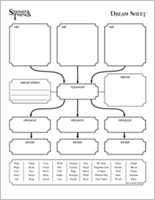 We played Stranger Things on Sunday. Fun was had. The new stuff was well received, and I got lots of good feeback. I am a proud papa. We got to use that thing to the left there, which is really friggin' cool, if I do say so myself.
If I'm feeling really saucy, I'll post an AP report, but I may not get around to it for a little while. If, you know, someone beat me to it, that would okay.
Labels: rpg, stranger things, work in progress
Stranger Things update
Wednesday, January 18, 2006

Readers with long memories will notice that the top number has actually gone down. This is because I have been re-writing extensively to make the game design work in a different way. I had to tear out several pieces and they haven't all been put back together again. In short, the game is becoming less of a Trollbabe clone, and even more its own animal.
I had planned to release the game in December 2005, but obviously that didn't happen. The game I would have released was like a first edition of the game (many of you have played it). It was a fun, playable game, but it wasn't entirely the game I wanted. The design I'm writing now is more like "Stranger Things Revised." My new deadline for publication (via Lulu) is March 1st.
Next on the Mighty Atom:
- A fleshed-out game process diagram, with flags and specific details of play
- The full version of Flip
Labels: rpg, stranger things, work in progress
Stranger Things Actual Play Links
Saturday, August 27, 2005
Several groups have played Stranger Things and posted about their games. Here are some links for those of you don't haunt the Forge:Blood and Shadows (Darren's group)
Lock, Stock, and Smoking Dragonhide (Chris's group)
The Judgment of Fish (Wilhelm's group)
Two Nights a Stranger (Mischa's group)
The GenCon Game (Joe's group)
Heartbreak Square (my group)
Demon Dog! (Roger's group)
Playtest at Forge Midwest (Ron, Matt, Andy, Tim)
Stranger Things Bootleg (Bailywolf's group)
Gypsies, Puppets, and the Octopus God (Darren's group)
Thanks, everyone.
Labels: play report, stranger things, work in progress
Stranger Things at GenCon
Tuesday, August 23, 2005
Joe Porrett ran a game of Stranger Things over two nights at GenCon Indy last week. He posted about it over on Esoteric Murmurs. I'm thrilled to hear that the game was a success. Thanks to Joe and all the other playtesters for their support and feedback so far. I really appreciate it.Labels: stranger things, work in progress
Stranger Things t-shirts
Friday, August 12, 2005
Stranger Things t-shirts are now available. Check out the store here:http://www.spreadshirt.com/shop.php?sid=4673
Some lucky people (they know who they are) will be sporting them at GenCon. Be one of the cool kids. Order one today. T-shirt revenue goes straight into the printing fund for the game.
UPDATE: I may still use Lulu for the first print version of the game. In which case, t-shirt revenue will pay for more artwork for the print book. In any case, t-shirt money goes back into the game.
Labels: stranger things, work in progress
Stranger Things temp website
Tuesday, August 09, 2005
A temporary website for the game is online now:http://www.onesevendesign.com/strangerthings
There's a sample PDF of the game there, along with the wallpapers. Yes, the links page is blank. I'll get around to it eventually.
Labels: stranger things, work in progress